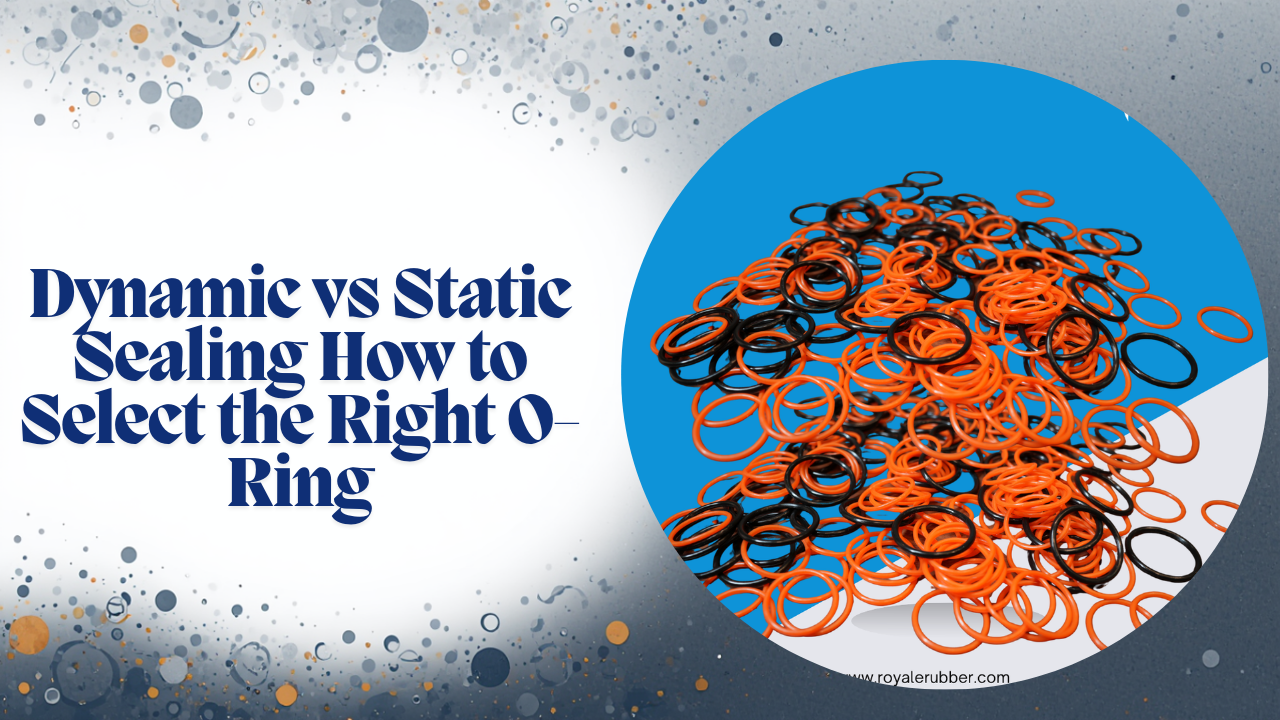
O-rings are fundamental components in industrial machinery, hydraulics, pneumatics, automotive systems, and manufacturing equipment. However, not all O-rings are created equal—their performance heavily depends on whether they are used in dynamic or static sealing applications. Understanding the difference between the two is crucial for selecting the right O-ring and ensuring long-lasting, reliable performance.
What Is Static Sealing?
Static sealing occurs when an O-ring remains stationary between two mating surfaces. The seal prevents leakage without relative movement.
Common Examples:
-
Flanges in piping systems
-
Valve housings
-
Hydraulic cylinder end caps
Key Considerations for Static O-Rings:
-
Compression Set Resistance: O-rings must retain their shape over time.
-
Material Compatibility: Must resist temperature, water, oils, or chemicals depending on the application.
-
Proper Groove Design: Ensures uniform pressure distribution and prevents extrusion.
Static O-Rings generally experience less wear and can tolerate a wider range of materials because there is no friction due to movement.
What Is Dynamic Sealing?
Dynamic sealing occurs when an O-ring moves relative to the mating surface, either by sliding or rotating. These seals must handle friction, pressure fluctuations, and mechanical stress.
Common Examples:
-
Hydraulic pistons and rods
-
Rotary shafts and pumps
-
Actuators
Key Considerations for Dynamic O-Rings:
-
Friction & Lubrication: Proper lubrication reduces wear and heat buildup.
-
Wear Resistance: Material must resist abrasion over long cycles.
-
Hardness Selection: Slightly harder O-rings often perform better in dynamic applications.
-
Design Adjustments: Back-up rings or special profiles may prevent extrusion in high-pressure dynamic systems.
Dynamic O-rings face higher stress, so material choice and design precision are critical.
How to Select the Right O-Ring
-
Identify the Application: Determine if the seal will be static or dynamic.
-
Evaluate Operating Conditions: Consider temperature, pressure, and chemical exposure.
-
Choose the Material Wisely:
-
Nitrile (NBR) – oil & fuel resistance, suitable for moderate temperatures
-
EPDM – water, steam, and chemical resistance
-
FKM – high temperature & chemical resistance
-
Silicone – extreme temperatures, flexible applications
-
-
Design the Groove Properly: Ensure correct compression and avoid extrusion.
-
Consider Add-Ons for Dynamic Seals: Back-up rings, lubricants, or special O-ring profiles improve performance.
Conclusion
Choosing the right O-ring depends on understanding whether the application is static or dynamic. Static O-rings prioritize long-term compression resistance, while dynamic O-rings focus on wear resistance, friction, and material durability. By selecting the appropriate material, designing the groove correctly, and considering operating conditions, you can ensure reliable sealing, reduce maintenance costs, and extend the service life of your equipment.