
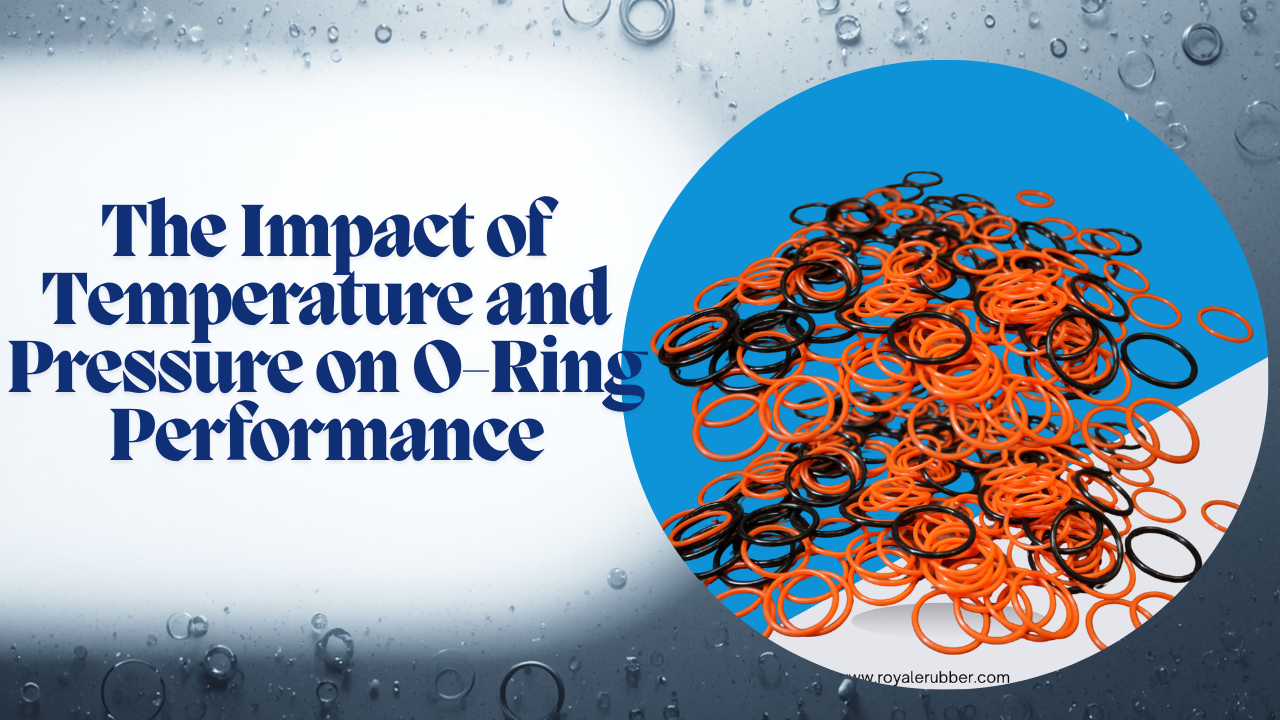
O-rings are small yet critical components in industrial machinery, hydraulic systems, automotive equipment, and manufacturing setups. Despite their size, their performance is heavily influenced by operating conditions, especially temperature and pressure. Understanding these factors is essential to ensure long-lasting, reliable sealing and to minimize downtime.
How Temperature Affects O-Rings
Temperature is one of the most critical factors affecting an O-ring's elasticity, durability, and sealing capability.
-
High Temperature Effects:
-
Rubber can soften or degrade at elevated temperatures, losing its ability to maintain a tight seal.
-
Prolonged exposure may cause cracking, hardening, or swelling.
-
Some materials, like FKM or silicone, are preferred for high-temperature applications due to their thermal stability.
-
-
Low Temperature Effects:
-
At low temperatures, O-rings can become brittle and lose elasticity.
-
Brittle O-rings may crack or fail under even minor compression.
-
Materials like Nitrile or EPDM perform better in cold environments.
-
Key Takeaway: Selecting the right O-ring material based on the expected temperature range is essential for consistent sealing performance.
How Pressure Affects O-Rings
O-rings are designed to create a tight seal by being compressed between two surfaces. Pressure impacts their performance in several ways:
-
Static Seals:
-
In static applications, the seal must withstand constant pressure without extrusion or deformation.
-
Excessive pressure can lead to permanent deformation or compression set.
-
-
Dynamic Seals:
-
In moving parts like pistons or shafts, high pressure combined with motion increases friction and wear.
-
Incorrect material or size selection can cause premature failure due to extrusion or tearing.
-
-
High-Pressure Applications:
-
Back-up rings or specially designed O-ring profiles may be necessary to prevent extrusion.
-
Pressure ratings must be considered during design to avoid leakage or seal damage.
-
The Combined Effect of Temperature and Pressure
High temperatures often reduce the mechanical strength of rubber, making it more vulnerable under pressure. Similarly, low temperatures can increase brittleness, which may cause seals to fail under high compression. Designers must carefully consider both factors together when selecting materials and designing grooves.
Best Practices to Maximize O-Ring Performance
-
Material Selection: Choose a material compatible with both temperature and pressure requirements (e.g., Nitrile for oils, EPDM for water/steam, FKM for chemicals/high heat).
-
Proper Sizing: Ensure the O-ring fits correctly in the groove to avoid extrusion or leakage.
-
Pressure Mitigation: Use back-up rings for high-pressure applications to protect the O-ring.
-
Testing: Conduct thermal and pressure testing to validate performance before production.
-
Preventive Maintenance: Regular inspection and timely replacement prevent unexpected downtime.
Conclusion
Temperature and pressure are two of the most significant factors affecting O-ring performance. Selecting the correct material, proper sizing, and design considerations are critical to ensuring reliable sealing, longer service life, and reduced maintenance costs. By understanding and managing these factors, manufacturers and engineers can achieve better operational efficiency and minimize costly failures.